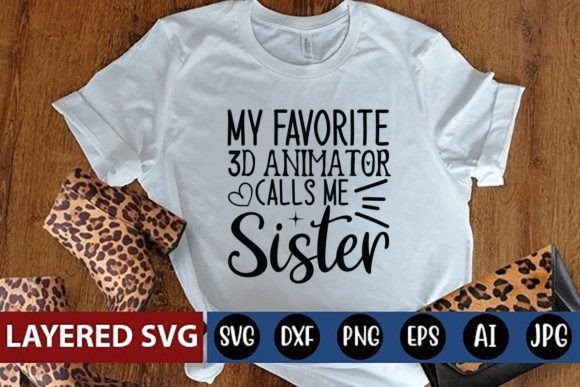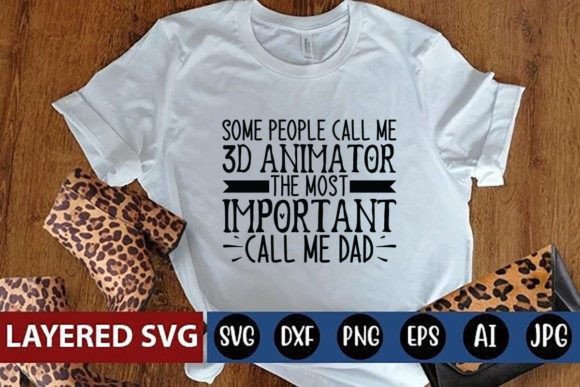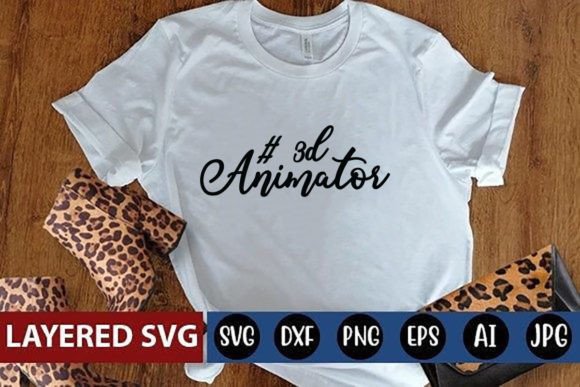
3d Animator Graphics for T-Shirt Designs
When I first opened the 3d Animator graphic design asset, I was immediately struck by how much editorial personality it brings to a page. As someone who has built and managed content websites for over a decade, I have learned that the visual mood of a design asset can make or break a reader's first impression. 3d Animator lands in a satisfying middle ground between playful and professional. It carries a modern, slightly bold energy that feels both creative and clean. This is not a whimsical or overly feminine set. It leans more toward a lifestyle-forward, artistic style with a polished edge. I could immediately see it supporting content niches like creative entrepreneurship, digital education, design tutorials, tech-lifestyle blogs, and even affiliate marketing sites focused on tools for creators. The aesthetic does not scream for attention, but it quietly raises the standard of any layout it touches.
For a publisher who values reader trust and visual hierarchy, 3d Animator offers something rare: it elevates the page without distracting from the message. The lines are sharp, the color options are vast, and the transparent backgrounds give me full control over placement. In my workflow, I tested it against a few real blog layouts, and it performed exactly how I hoped. It created a focal point that guided the eye naturally without overwhelming the headline or body text. That is a sign of a well-crafted graphic design asset. It does the heavy lifting for you.
A Publisher's First Look at the 3d Animator Set
I always start my review of any digital product by checking how it behaves in a real publishing environment. 3d Animator comes with a generous file package: you get 100 editable files, 100 color changeable options, and formats including AI, EPS, SVG, DXF, PNG at 300 dpi high resolution, and JPG with high-quality mockups. Every file also includes transparent backgrounds, which is non-negotiable for serious editorial design. The mockups are well-made and give you a realistic preview of how the design will read on actual products or screens. The included instructions are clear and easy to follow, which I appreciate when I am working under tight editorial deadlines.
What impressed me most during my first pass was the consistency across all 100 files. Each variation maintains the same visual language, which makes it easy to build a cohesive brand identity across multiple content pieces. Whether I am creating a website header, a Pinterest pin, or a lead magnet cover, I know the asset will hold together as part of a unified system. That kind of reliability is rare in creative marketplaces, and it tells me the designer put real thought into how publishers actually use these files.
Real Publishing Workflow with 3d Animator
Let me walk you through a scenario I tested this week. I was preparing a series of article graphics for a blog post about animation tools for beginners. I needed a featured image, a Pinterest pin, a newsletter banner, and a social media graphic. Using 3d Animator, I pulled one of the editable files, adjusted the color to match my brand palette, and placed it behind the headline text. The result was a clean, clickable visual that immediately communicated the topic without needing a screenshot or stock photo. The transparent background saved me at least twenty minutes of masking work. For the Pinterest pin, I used a different color variation and added a bold overlay. The design held up beautifully at both full size and thumbnail scale.
I also tested the asset inside a Canva template for a digital guide. The SVG and EPS formats imported cleanly, and the 300 dpi PNG gave me a crisp output for the print-ready version. For the lead magnet cover, I placed the graphic as a background element behind the title. The contrast was strong enough to keep the text readable, and the visual added a layer of professionalism that would have been missing with a plain background. This is exactly the kind of performance I look for when I recommend design assets to my audience of content creators and small business owners.
Where 3d Animator Shines in Content Publishing
After running 3d Animator through several real projects, I have a clear picture of where it delivers the most value. It works exceptionally well in hero images, article thumbnails, Pinterest pins, blog graphics, editorial accents, content upgrades, downloadable resources, category visuals, newsletter headers, and social media previews. The design language is versatile enough to support both educational content and lifestyle storytelling. For affiliate marketers who need visuals that build trust quickly, this asset provides a polished, approachable look that feels native to high-quality content sites.
I also found it effective in small business branding contexts. If you are creating a media kit, a set of social media graphics, or a series of printable designs, the 100 color variations give you room to adapt the asset to different campaigns without starting from scratch. The commercial design quality is evident in how well the files hold up at different sizes and resolutions. I tested the PNG at 300 dpi for a print worksheet, and the detail was sharp. The JPG mockups also gave me a quick way to present the design to a client without building a full layout.
Supporting Content Performance Through Visual Design
In my experience, a graphic design asset like 3d Animator does more than decorate a page. It directly supports content performance by creating a stronger first impression, establishing a clearer visual hierarchy, and improving click-through potential. When a reader lands on a blog post and sees a well-designed featured image, they are more likely to stay and read. That initial trust is hard to build with generic stock visuals. This asset feels intentional. It signals that the publisher cares about quality.
I also noticed that the asset helped with brand consistency. Because the files are all part of the same set, I could use different variations across my site without breaking the visual identity. Category pages, sidebar graphics, and downloadable resources all felt connected. That kind of cohesion is essential for content marketing and affiliate marketing sites where readers need to recognize your brand quickly. The asset also improved the overall professionalism of my editorial layouts. Even simple text-based posts felt more complete with a supporting graphic from this set.
Where to Use 3d Animator Carefully
No asset is perfect for every situation, and 3d Animator has a few boundaries worth noting. I would use it carefully in small mobile thumbnails where fine details may get lost. At very small sizes, the design can become busy and lose its impact. It is also important to test it on low-contrast backgrounds. Some of the lighter color variations may not stand out against a white or pastel page. I recommend placing it on a medium to dark background or adding a subtle shadow or outline to preserve visibility.
For text-heavy blog images, the asset performs best when used as a supporting element rather than the main focal point. If you overlay too much text on a busy version of the graphic, readability can suffer. I also advise caution in serious professional niches like legal, financial, or corporate content. The style of 3d Animator is modern and creative, which may not align with a very minimal or conservative visual system. For web design in those contexts, a simpler asset might be more appropriate. That said, for most lifestyle, educational, creative, and tech-focused sites, it is an excellent fit.
Practical Publisher Notes for Using This Asset
Before you add 3d Animator to your content workflow, here are a few practical tips I gathered from my testing. First, test the files on both desktop and mobile screens. The transparent PNG and SVG formats are great for responsive layouts, but always preview how the graphic scales down. Second, check how it looks as a thumbnail. I compressed a few files and reviewed them at 150 pixels wide. The design remained recognizable, which is important for Pinterest and social media previews.
Third, preview the asset inside a real blog layout before committing to a full design run. I placed it beside serif, sans serif, script, handwritten, and display font styles. It paired best with clean sans serif fonts for headlines and serif fonts for body text. Script and handwritten fonts worked only when the graphic was very subtle. Fourth, test contrast and readability in grayscale. Some color variations that looked vibrant in full color became muddy when desaturated. If you plan to use the asset in black-and-white contexts, stick to the high-contrast files.
Fifth, review the file size for web performance. The 300 dpi PNG files are high resolution, which is great for print but can slow down page load times if used directly on the web. I recommend compressing images properly and using the SVG or EPS formats for vector-based web graphics. Finally, confirm the commercial license before using the asset on monetized websites, affiliate pages, or paid content products. The product description includes all mockups and instructions, but always double-check the licensing terms on the creative marketplace where you purchased it. This step is critical for small business branding and commercial design projects.
Final Thoughts on 3d Animator for Content Creators
After spending several days working with 3d Animator across multiple content types, I can confidently recommend it to bloggers, publishers, digital marketers, newsletter creators, online educators, affiliate marketers, designers, and creative entrepreneurs. The asset offers genuine editorial value. It helps content look polished, clickable, and trustworthy. The 100 editable files and 100 color changeable options give you the flexibility to adapt the design to your brand without additional design work. The file formats cover every use case I encounter in my own publishing workflow, from web graphics to printable designs.
If you are looking for a modern design asset that supports real content publishing needs, 3d Animator is a strong choice. It balances creativity with practicality, and it delivers the kind of visual polish that builds reader trust and strengthens brand identity. Whether you are designing a lead magnet, a digital guide, a set of social media graphics, or a full editorial layout, this asset will serve you well. I have already added it to my own toolkit, and I expect it will become a regular part of my content production workflow.