Ghost on Hobby Horse: A Stitcher's Review
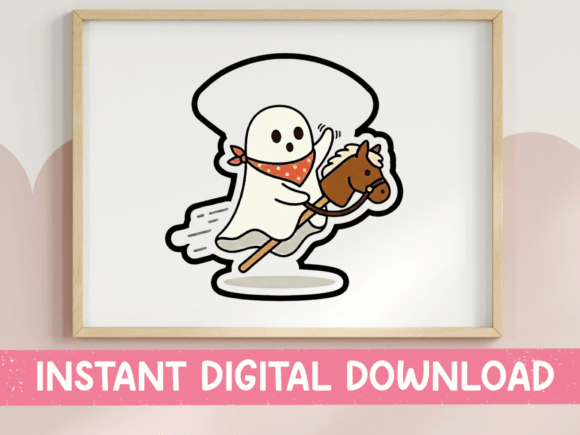
I get a lot of design files crossing my desk, but every now and then one stops me mid-scroll. The Ghost on Hobby Horse Sticker Design is exactly that kind of file. It's listed under T-Shirt Designs and Graphics, but my first thought was, "This little guy needs to be a patch." There's a confident, playful energy to a white ghost bouncing along on a classic brown hobby horse, a rust-orange bandana trailing as he goes. It's spooky-cute without being childlike, and that's a sweet spot for a lot of my clients who run handmade shops or boutique Etsy stores. Before I stitch anything, I evaluate a design like this for real-world performance. Will it hold up on a tote bag? Will it sell at a fall market? Let me walk you through what I found.
First Look: Why This Ghost Works in Embroidery
The silhouette is clean. The round ghost gives it a friendly, approachable feel, while the hobby horse keeps the theme firmly in that vintage Halloween or Dia de los Muertos aesthetic territory. From a digitizing perspective, this translates beautifully. Solid fill stitches for the horse and ghost, satin edges for the bandana, and running stitch details for the horse's mane and eyes. The rust-orange bandana is a smart design choice—it provides a pop of warmth against the cool white ghost and brown horse, and it breaks up what could otherwise be a flat color palette. For a machine embroidery design, that contrast is gold. It creates visual interest without requiring a massive thread color change. This is exactly the kind of design that appeals to a broad customer base: parents looking for baby embroidery with a twist, holiday shoppers hunting for unique holiday gifts, and anyone who loves unexpected character mashups in their custom apparel.
Putting the Design to Work on a Real Tote Bag
I recently used this design for a custom tote bag order. A repeat client wanted a unique fall gift for a friend who runs a vintage shop. The theme? Quirky, spooky, but approachable. Perfect. I opened the embroidery file and immediately checked the stitch density. The design was well within the range for mid-weight cotton twill, which is my go-to for tote bags. I used a medium-weight cutaway stabilizer to keep things stable. For thread colors, I pulled a bright white, a rich rust-orange rayon thread, a warm chocolate brown, and a deep black for the eyes and the hobby horse stirrups. The design stitched out cleanly. The satin stitch on the bandana had a nice sheen, and the fill stitch for the ghost was smooth with no gaps. The hobby horse outline handled the curves of the wooden toy well, and the overall effect was a high-quality, stitchable graphic that looked like it belonged on a boutique retail rack, not just a hobby project.
Where This Design Shines Brightest on Your Products
This isn't just a one-trick pony. The Ghost on Hobby Horse Sticker Design has serious range across multiple product categories. Here is where I see it performing best for a small shop product lineup or craft business inventory:
- Embroidered Patches: This design is screaming to be an iron-on or sew-on patch. The bold shapes and clear outlines make it ideal for patch production. You can stitch it on felt or twill, cut it out, and sell it as a standalone item at craft fairs.
- Custom Apparel: T-shirts, sweatshirts, and baby onesies are natural fits. The spooky-cute vibe is huge right now, and this design hits that sweet spot. It works beautifully as a chest print on a toddler shirt or a center-back design on a hoodie.
- Handmade Gifts: Think pillow covers, kitchen towels, and blankets. A set of towels with this ghost design would make a fantastic hostess gift or holiday gift for a friend who loves whimsical decor. It adds a handmade product touch that buyers notice.
- Personalized Gifts: Because the design is relatively compact and bold, it leaves room for adding a name or date. I tested it on a baby blanket with a name underneath in a simple running stitch, and it looked professional and intentional.
Its origins in T-Shirt Designs mean it was built with bold graphics in mind, and that translates directly to strong stitching.
Practical Considerations for Stitchers & Sellers
Before you start selling finished products featuring this design, there are a few technical and business details you should nail down. Let's talk shop.
Hoop Size and Stitch Density
Always check the suggested stitch count and density for your specific machine and hoop size. A design like this might require a 5x7 hoop to prevent distortion, especially with the hobby horse legs and the bandana tie. If you try to cram it into a 4x4 hoop, you risk losing definition in those smaller details. I always advise running a test stitch on scrap fabric first. Confirm that your digitized embroidery file is optimized for your machine and that the stitch angles complement the design's flow.
Fabric Choices: What Works and What Doesn't
This design performed beautifully on medium-weight cotton twill and denim. On a stretchy jersey knit t-shirt, I would absolutely recommend a cutaway stabilizer and a lightweight topping to prevent the stitches from sinking and distorting the ghost's round shape. For baby items, stick with stable knits or woven fabrics. Avoid very thin or loosely woven fabrics, as the fill stitch areas might cause puckering. Also, think about the base color. A white ghost on a white shirt might lack punch. A quick outline stitch in a dark thread around the ghost can solve that, or just place the design on a darker background.
The Critical Check: Licensing for Your Business
This is where many creative entrepreneurs trip up. Since this design is listed under Graphics, you absolutely must check the commercial use license before you start selling finished products, whether that's a batch of t-shirts for a local boutique or a single personalized gift for a paying customer. An Etsy seller needs that commercial license to be clear and transferable to avoid issues down the road. The same goes for using it in printable mockups or digital product previews. I always tell my students: confirm the license terms before you buy the file and before you stitch it for profit. It protects your craft business.
Avoiding Pitfalls: When to Be Careful
No design is perfect for every surface. Here is where you should apply some caution with this particular machine embroidery design:
- Small Hoops & Curved Surfaces: Placing this on a very small hoop or a curved surface like a cap can distort the round ghost and the thin hobby horse legs. Test on a scrap curved piece of fabric first if you plan to make hats.
- Dense Stitch Areas: If the design has very dense fill stitches, it can make the fabric stiff. This is important for items like baby clothes or soft blankets where you want the fabric to drape. Consider using a lighter fill stitch density if your software allows editing.
- Frequent Washing: For items that will see heavy wash cycles (baby bibs, tea towels, kitchen towels), use high-quality polyester thread and a dense enough stitch pattern to withstand wear. A loose satin stitch on the bandana might fray over time if not properly digitized.
- Thread Color Tests: I always run a black and white mockup of a new embroidery project before I touch the thread. It helps me see the negative space and check the balance of the elements. For this design, the contrast between the solid white ghost, the mid-tone brown horse, and the bright rust-orange bandana is crucial. Test your specific thread brands against your fabric to ensure the colors pop.
Final Verdict: A Versatile Asset for Your Shop
The Ghost on Hobby Horse Sticker Design is more than just a fun graphic. For the savvy embroiderer, it's a versatile asset that can drive sales, delight customers, and showcase your technical skills. Whether you are stitching a personalized gift for a friend, building a lineup of holiday embroidery for a craft fair, or expanding your Etsy shop's custom apparel offerings, this design brings a playful, polished energy. Just approach it with the same thoughtful preparation you would any new embroidery project: test your fabrics, check your stabilizer compatibilty, review your hoop size options, and confirm your commercial licensing. Do that, and this little ghost is ready to ride right into your product lineup and become a customer favorite. It earns a solid spot in my project file for future use, and I suspect it will in yours too.